
Table of Contents
How to Choose an Amazon Management Agency: A Vetting Guide
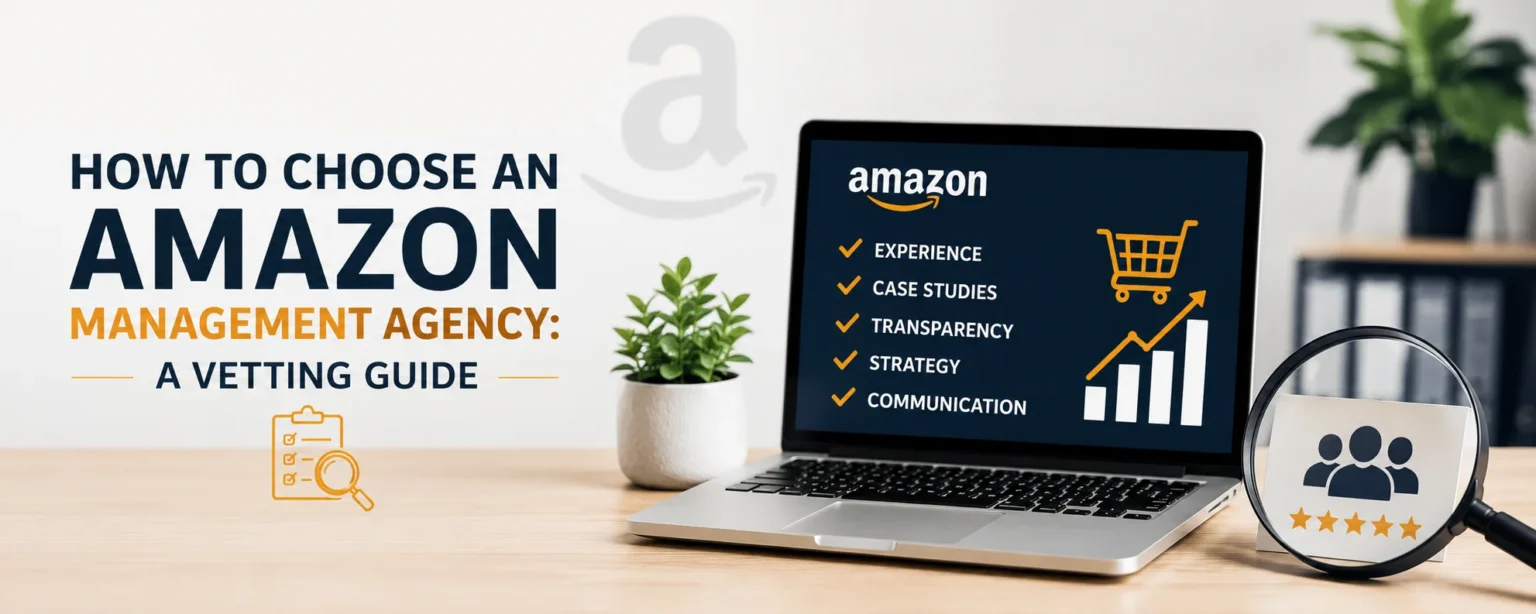
Picking the wrong Amazon management agency doesn’t just waste money. It can cost you organic rank, account health, and months of compounding growth you’ll never recover. Sellers who’ve already made one bad hire ask the same question the second time around: how do I choose an Amazon management agency I can actually trust? This guide gives you a repeatable framework: service scope, verified results, interview questions, pricing benchmarks, contract terms, and what a real onboarding looks like. A full-service agency like ZIWLD, where PPC, SEO, creative, and account operations run as one coordinated system, sets a useful benchmark for what you should measure every other Amazon account management partner against.
The mistake most sellers make is evaluating agencies on presentation quality instead of operational depth. A polished deck and a few big client logos are easy to produce. What’s harder to fake is a repeatable process, a named team with defined account ownership, and case studies that show a clear before-and-after with a timeline. That’s what this guide trains you to look for.
What "full-service" actually means and why integration matters
Most agencies sell individual services. Very few deliver a coordinated strategy where every function reinforces the others. The difference between a vendor that manages PPC in isolation and a genuine Amazon account management service is significant. When advertising runs without ownership of listing quality, you’re paying to drive traffic to pages that can’t convert. When keyword research happens in the SEO team without informing ad targeting, you’re leaving money on the table twice.
The four functions that must work together for compound growth are PPC management (ACOS, ROAS, campaign structure), Amazon SEO and listing optimization, creative assets (A+ Content, storefront, product images), and catalog and account operations. ZIWLD runs all four under one roof with shared data and a single growth strategy. The keyword research that improves organic rank also feeds the ad campaign structure, and conversion rate data from listing tests informs creative decisions. No handoffs between departments, no siloed reporting, no competing priorities pulling the account in different directions.
When you evaluate any agency, ask directly: do your PPC, SEO, creative, and catalog teams operate from the same strategy and the same data? A clear “yes” backed by a specific process is what you’re looking for. A vague answer about collaboration signals that these functions operate independently, meaning you’re buying individual services packaged under one invoice.
How do I choose an Amazon management agency: evaluating proof of results
Any agency can make claims. The ones worth hiring can back those claims with specific metrics, named clients, and honest context about starting conditions. A credible case study must include a named client or a clearly described vertical, a documented baseline problem, the specific actions the agency took, a measurable outcome, and a timeframe. Percentage gains without context are nearly meaningless. A 626% sales increase over two years tells a very different story depending on whether the starting revenue was $5,000 per month or $500,000.Organic ranking on Amazon is a compounding process that starts building signals the moment a listing goes live. The keywords in your title, bullet points, backend search terms, and A+ Content all inform how Amazon indexes and tests the listing early. If those elements are weak or missing on day one, PPC spend runs against a listing that converts below category average, which raises ACOS and slows rank-building. You end up paying more for the same velocity signal.
A fully optimized listing does two things at once: it gives PPC campaigns the conversion rate they need to stay efficient, and it accumulates organic relevance signals in the background from the very first sale. Skipping listing optimization to handle it later means rebuilding on a foundation that already sent weak signals to the algorithm. The compounding effect works for you or against you from day one. There is no neutral position.
The metrics that matter most in a case study
When reviewing case studies, look for results that reflect both efficiency and business impact together. TACoS (total advertising cost of sales) is the most important account health metric because it ties ad spend to total revenue, not just ad-attributed sales. An agency that shows improving TACoS alongside growing total sales is proving it can build compounding growth, not just manage budget allocation. Industry benchmarks for 2026 place healthy TACoS for established brands in the 8, 15% range, with stronger accounts reaching 5, 12% as organic sales grow.
Stage-appropriate KPI timelines
Hold agencies accountable to stage-appropriate KPI expectations. At three months, you should see cleaner account structure, better reporting visibility, and early efficiency fixes. By six months, TACoS should be stabilizing or declining, organic rank improving, and conversion rate noticeably better than baseline. At twelve months, the expectation is compounding growth with reduced dependency on paid spend. An agency that can’t map its results to this kind of timeline during the sales process will struggle to deliver during the actual engagement.
The interview questions that reveal who you're actually hiring
The sales call is designed to impress you. The right questions break through that and expose how the agency actually operates: who does the work, what tools they use, how they report, and how they behave when things go wrong. Start with the single most revealing question: “Who will actually manage our account, by name, role, and percentage of their time?” This one question surfaces whether you’re getting a senior strategist or an overloaded junior rep. Follow it by asking how many accounts each person manages and what happens to your account if that person leaves.
On tools and data, ask specifically: “What do you report weekly versus monthly, and who presents it?” and “Do we retain full ownership and admin access to Seller Central and all ad accounts?” Any agency that hesitates on data ownership or cannot explain what decisions their reports are designed to enable is a clear signal to walk away. A strong agency should also be able to walk you through a real search term report from a current client, not a slide deck. You want to verify their process is active and forward-looking, not just retrospective.
Two questions that separate serious agencies from polished sales operations: “Tell me about a client engagement that went sideways and what broke,” and “What is the biggest strategic mistake you’ve made with a client in the last 12 months?” Good agencies answer these candidly and specifically. Poor ones deflect, blame the client, or give you a story that conveniently ends with them being right.
How do I choose an Amazon management agency: pricing and contracts
Pricing confusion is one of the biggest reasons sellers end up with the wrong agency. Three main structures dominate the market. A flat monthly retainer is predictable and works well for established accounts with steady ad spend. A percentage of ad spend (typically 10, 20%) is common for PPC-only relationships but creates a potential misalignment: the agency earns more when you spend more, regardless of efficiency. A hybrid retainer plus performance incentive is the most aligned structure for full-service engagements because the agency wins when you win.
Here’s what you should expect to pay based on scope in 2026:
- PPC-only: $1,000, $5,000/month
- Entry or light management: $1,500, $3,000/month
- Mid-market full account management: $3,000, $7,500/month
- Full-service (PPC, creative, catalog, operations):$5,000, $20,000+/month
Cheaper is not better when coordination failures cost more than what you saved on the retainer. A $2,000/month PPC-only agency running campaigns against unoptimized listings is burning your ad budget on unconverted traffic. The real cost of a fragmented approach almost always exceeds the premium of a properly integrated one, which is why Amazon seller agency comparison should always weigh total account impact, not just the monthly invoice.
Contract terms and red flags that protect agencies, not sellers
A bad contract can trap you for 12 months, hand over ownership of your creative assets, and make it nearly impossible to exit cleanly. Before you sign anything, scrutinize these specific clauses:
- Lock-in periods of 12 or more months without performance-based exit clauses
- Auto-renewal terms with short opt-out windows that trigger silently
- Exclusivity clauses that restrict working with other vendors or specialists
- Percentage-of-ad-spend pricing with no efficiency guardrails
- Vague scope language that enables undefined billing or scope creep
- Guaranteed ranking or sales promises, which no agency can responsibly make
A fair, seller-friendly contract includes month-to-month or short initial commitment with clear renewal options, full seller ownership of all account assets including campaigns, A+ Content, creative files, and brand registry access, transparent line-item fees, a 30-day termination notice, and direct Seller Central admin access retained by your brand at all times. If an agency won’t put in writing what they will do, who will do it, how success will be measured, and how you can leave, that contract is too risky to sign.
What good onboarding and reporting look like after you hire
Signing the contract is not the finish line. How an agency conducts the first 90 days tells you whether you made the right choice or are about to repeat the same mistake with a different logo on the invoice. A competent agency starts with a comprehensive account audit covering suppressed listings, wasted ad spend, keyword gaps, and content deficiencies, all identified before touching a single campaign. By day 30, you should have a documented strategy. By day 60, campaigns should be restructured and running. By day 90, you should have your first performance review with baseline metrics established and a clear six-month growth roadmap.
The accountability cadence that keeps agencies honest
Ongoing accountability should follow a consistent rhythm. Weekly: a performance summary covering spend, ACOS, TACoS trends, and organic rank movement. Monthly: strategy calls that tie results to specific decisions the agency made, not just numbers on a dashboard. Quarterly: reviews that assess whether the agency is compounding growth or simply maintaining a steady state. This cadence matters because gaps in communication almost always precede gaps in performance. If you’re still chasing your account manager for basic numbers at month three, that’s your answer.
ZIWLD’s free listing audit is a practical, zero-risk way to start this process. Before any engagement begins, you’ll see the depth of thinking applied to your account, specific gaps in listing quality, ad structure, and content identified and documented. That’s what accountability looks like before you’ve signed a single page.
The right agency choice compounds over time
When sellers ask how do I choose an Amazon management agency, the answer always comes back to four pillars: service integration, verifiable results, fair contracts, and accountability built into the reporting structure from day one. A seller who runs this vetting process, comparing service scope, interviewing the actual team, reviewing real case studies with KPI timelines, and reading contracts carefully, is far less likely to waste six months and thousands of dollars on the wrong partner.
The framework in this guide applies to every agency you evaluate. Verify their results and interview the people doing the actual work. Understand the pricing structure and protect yourself in the contract. Define what you need upfront, then hold them to a clear onboarding standard. When you approach hiring an Amazon management agency this way, the process becomes repeatable regardless of what stage your business is at.
If you want a low-risk starting point, ZIWLD’s free listing audit gives you a concrete look at what an integrated agency identifies in your account before you commit to anything. The audit surfaces immediate opportunities in your listing, ad structure, and content, and shows you what a coordinated growth strategy actually looks like in practice. Request your free audit and see the difference before you sign a single page.
Frequently asked questions
What does an Amazon management agency do?
An Amazon management agency helps sellers manage and grow their Amazon business through services such as account management, Amazon SEO, PPC advertising, listing optimization, catalog management, reporting, and marketplace strategy.
How do I choose the best Amazon management agency?
To choose the best Amazon management agency, compare relevant Amazon experience, case studies, services, pricing, communication, reporting, account management processes, and contract terms. Choose the agency that best matches your business goals rather than simply choosing the cheapest option.
How much does an Amazon management agency cost?
Amazon management agency pricing varies depending on the services required, account size, advertising spend, product portfolio, marketplaces, and engagement model. Ask each agency for a detailed breakdown of management fees and any additional costs before signing a contract.
What questions should I ask an Amazon agency?
Ask about Amazon experience, relevant case studies, account strategy, PPC management, SEO, reporting, account manager experience, communication, pricing, contract terms, and what happens when the relationship ends.
Is hiring an Amazon management agency worth it?
Hiring an Amazon management agency can be worthwhile when a seller needs specialized expertise, additional resources, or ongoing account support. The value depends on the agency’s capabilities, the seller’s goals, account complexity, and the results delivered.